LOWBLOCK Soccer
A downloadable game for Windows and Linux
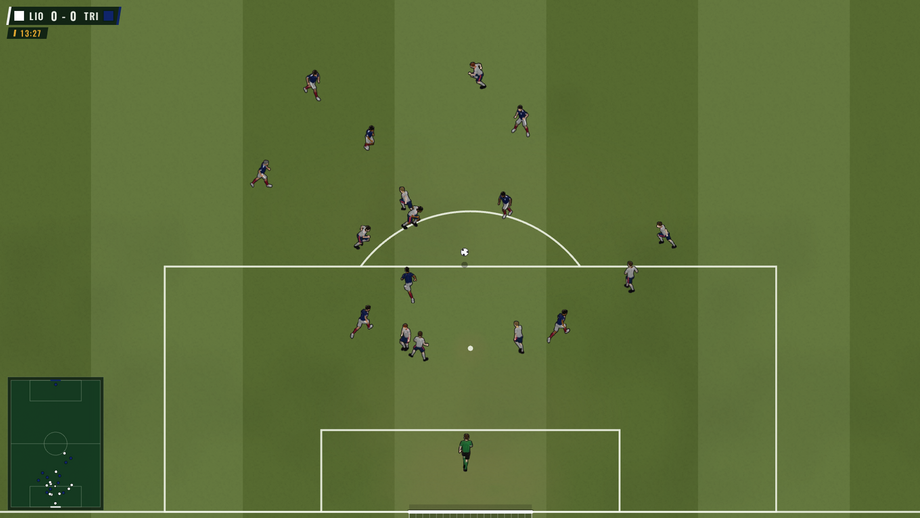
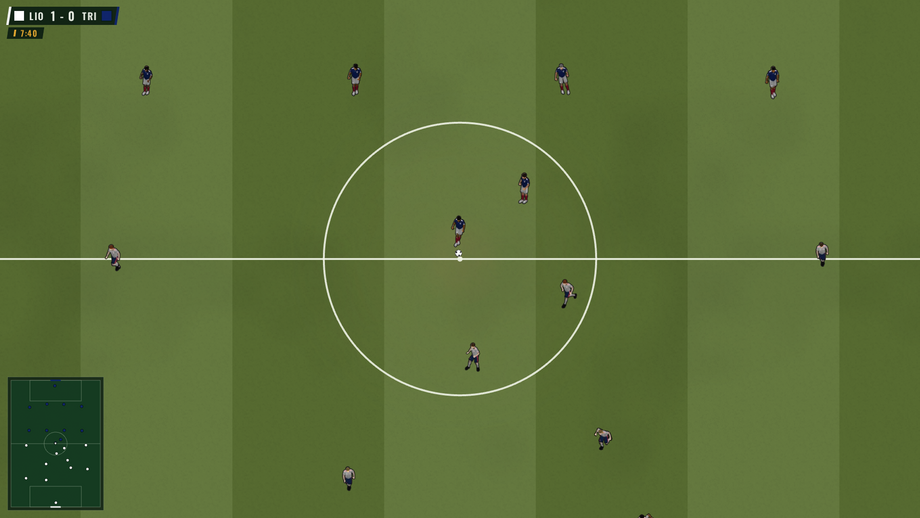
A proper football match, played top‑down.
Play together - solo, sofa or online.
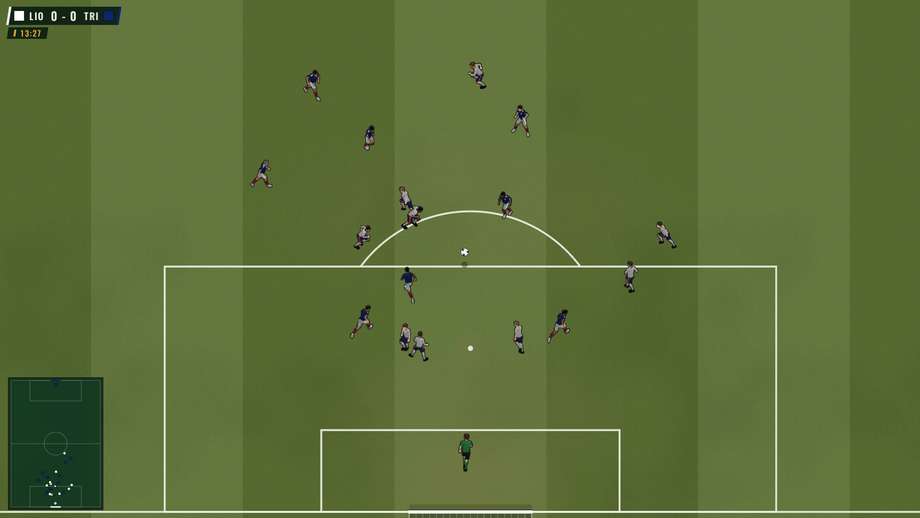
LOWBLOCK is a top‑down eleven‑a‑side football game inspired by the PS2/Xbox 360 era - when passes mattered, tackles had weight, and a 1–0 win felt earned. It’s football with all the unpredictable bits left in: loose touches, threaded passes, mistimed slides, offsides, fouls, penalties, and goals you actually work for.
It’s not a kickabout. It’s not a tactics sim. It’s a full match of football, seen from above.
What's in the prototype
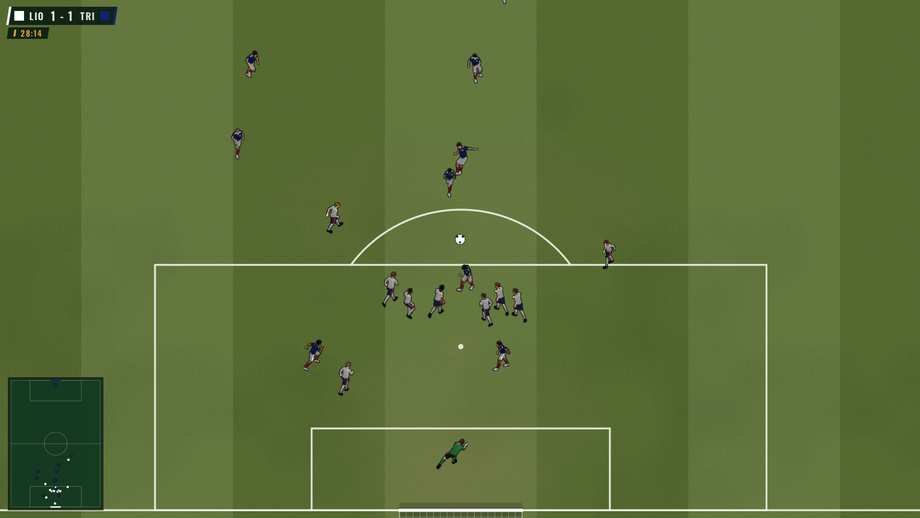
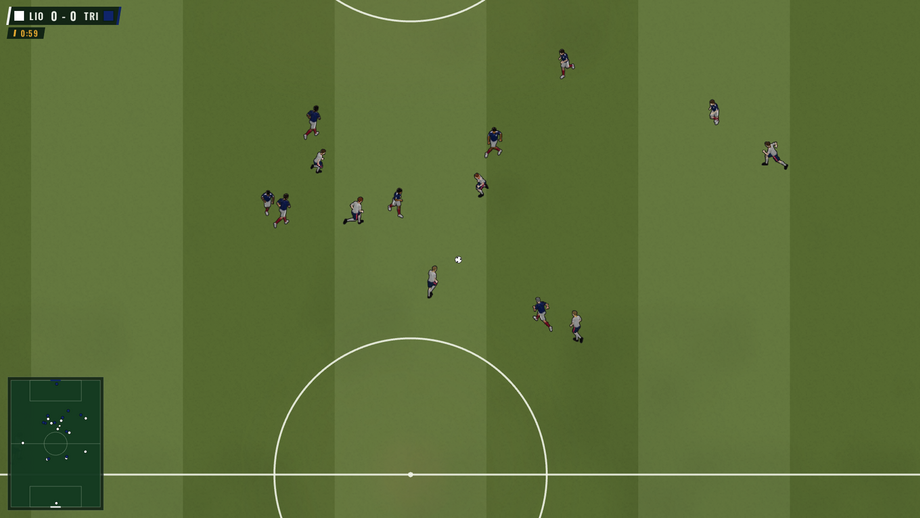
- Full eleven-a-side - two halves with a clock, half time and a scoreline that remembers who scored.
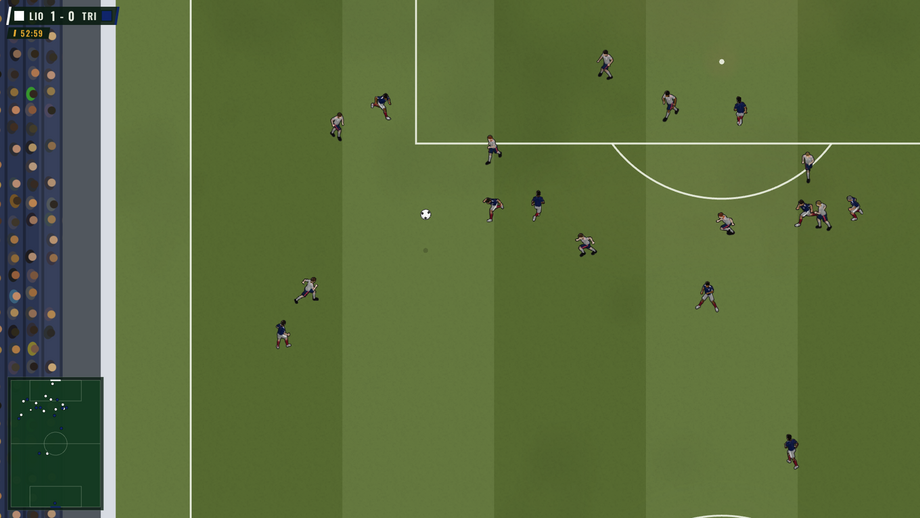
- Passing that matters - you pick short and long, through balls, lofted balls, crosses, headers.
- A keeper who plays properly - works, but needs improvement and variation.
- A referee - real decisions, currently invisible.
- Four teams - each with home and away kits; more will follow.
- Local multiplayer - no split screen; everyone picks a side and plays together or against each other.
- A match that feels earned - with goals, fouls, cards, offsides, penalties but no VAR.
What’s coming next
- Online multiplayer - the game already works online but I need to work out how to structure the online mode.
- Formations, tactics, squad management - pick your eleven, change shape, adjust roles.
- Tournaments, leagues, cups, saving squads - competitions in co-op and online.
- More teams - and possibly a full editor.
- Polish - animations, UI, presentation.
Controls
LOWBLOCK is controller‑only. That’s deliberate: the game ended up with more actions than a keyboard can carry easily (although I may revisit that decision later).
The controls can be configured in-game but should be familiar left stick to move, face buttons for pass/shoot/slide left shoulder switch player, right trigger sprint.
For local play, plug in one pad per player.
Feedback
What I most want to know is how it feels: whether defending is tense, whether the keeper is too good or not good enough, and whether a goal feels earned. Balance in a game like this can't be worked out on my own — bots playing bots tells you almost nothing — so anything you notice is genuinely useful.
Credits
Made by Jim Rowe. The players are rendered from a 3D model driven by motion-capture animation, baked out to 2D sprite sheets — there's a devlog about how that works and why it was necessary. Sound is built from freesound_community recordings via Pixabay. The prototype's original pixel-art players came from Chaser's Gaming's football asset pack, which got this far enough along to be worth continuing.
Download
Click download now to get access to the following files:
Development log
- Devlog: Rendering 2D sprited from 3d models3 days ago
- DevLog: Why another soccer game?3 days ago
Comments
Log in with itch.io to leave a comment.
This is an ambitious project. Good luck! You haven't mentioned if the players can do ball tricks to beat their opponents.
So far no tricks, it is purely a case of shielding the ball with your body and passing past people. I hadn't really considered this but eventually there could be a Cruyff turn or a step-over.
I'd like to know why you chose PixiJS over 2D game engines? Wouldn't they save you a lot of work?
Good question, there are a few reasons - maybe not all good and maybe specific to me.
I have used PixiJS and Colyseus before for prototypes so I was familiar.
My day job is a developer, so I know how to code - but I do not know any of the game engines. So to be productive right away I opted to stick with what I know instead of trying to learn something that I find somewhat baffling. If I was going to use a game engine DragonRuby seems to be closer to my style that something like godot or defold.
It runs natively on the web, it's convenient to build downloadable electron versions but I may ultimately host the game with integrated multiplayer rather than requiring a download.
Ah, I understand. I found the hard way that using a framework is akin to trying to re-invent the wheel. Game engines save you a lot of work over time. Some game engines out there are stripped down and lightweight, maybe consider using one of them. The engine won't stand in your way, and you could add the things you're missing. Best of luck.
Thanks you're probably right - but it all started as a quick prototype to see what I could get working and then it snowballed... I imagine that happens a lot.